


How to Shave Body Hair with a Trimmer
Check the product manual and fit the right attachment. On clean, dry skin, hold skin flat and trim with the grain using light pressure. Stop if irritated, then rinse and moisturize.


No matching manual found. Check the product name, model or SKU.
Quick navigation
Jump to the stage you need. Each one answers a different part of the routine.
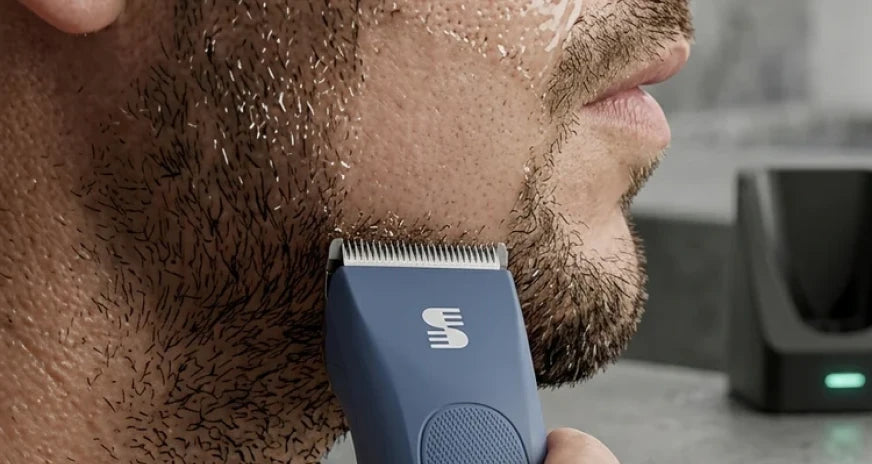
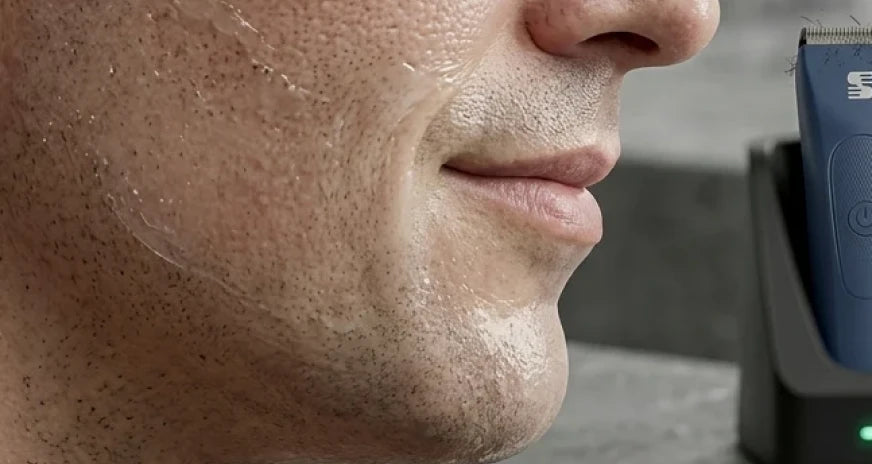
How to shave body hair in 6 steps
Use your product manual to confirm the right attachment and approved body areas before you begin.

Check the manual and charge
Confirm the approved body areas, wet-use and washable parts for your model, then make sure the device has enough charge.

Choose the result and attachment
Start with the guard, blade or shaving head that matches your goal. If unsure, begin with the longer guard.

Clean and dry the skin
Wash and pat the area dry. Shorten very long hair first so the main pass does not pull or clog the blade.

Keep skin flat and start with the grain
Use light pressure and one slow, steady pass in the direction the hair grows.

Check your skin before another pass
Pause and assess comfort. Only then decide whether to make a second pass across or against the grain.

Rinse, moisturize, and clean up
Rinse and pat the skin dry, moisturize if needed, then clean and air-dry the approved trimmer parts.
Watch the guide
How to shave with a body trimmer: video guide
Watch the SPOTMATE technique for preparing skin, choosing a blade, trimming in the right direction and caring for your trimmer.
Play the technique
01 / 01:26
Why grooming matters

Heat and sweat
Heat and sweat can make grooming feel uncomfortable. A quick trim helps you feel fresh again.

A fresh reset
A simple grooming routine helps you feel fresh, comfortable, and ready for what comes next.

Feel ready
It is not about appearance. It is about feeling comfortable, confident, and ready.
Choose your result and attachment

Trim
Keep visible length with a guard comb. This is the gentlest starting point and usually carries the lowest irritation risk.

Close trim
Leave very short stubble with a manual-approved bare blade or skin-close head. Use light pressure and limit repeat passes.

Shave
Choose a skin-level finish only when both the shaving head and body area are approved in your product manual. Irritation risk is higher.
Wet vs Dry Trimming
Both wet and dry trimming can work. The right choice depends on your skin, hair length, and whether your trimmer is waterproof.
Dry Trim
Best for longer hair, first passes, and better visibility. Use dry trimming when:
- Your hair is longer or thicker
- You are using a guard comb
- You want to see the trimming line
- You are trimming outside the shower
No Shaving Cream

Wet Trim
Best for sensitive skin and smoother glide. Use wet trimming when:
- Your trimmer is waterproof
- You want to reduce friction
- Your skin gets irritated easily
- You are trimming in the shower
Shaving Cream

If you are unsure
Start with a dry trim on longer hair, then use wet trimming for a closer finish only if your device supports it.
Pick the Right Guard Length
Not sure where to start? Choose a longer guard first, then go shorter only if your skin feels comfortable.

Close trim
Best for areas that are already short. Use light pressure and avoid going over the same spot too many times.


Everyday grooming
A safer starting point for most body areas, especially if you want comfort over closeness.


First pass
Best for longer or thicker hair. Trim down gradually before switching to a shorter guard.

Choose the right trimming direction
(WTG) Angle

With The Grain Angle
30-45°
Best for beginners and sensitive skin.

(ATG) Angle

Against The Grain Angle
45°
Closest result, with more skin contact and a higher risk of irritation.

(XTG) Angle

Across The Grain Angle
60–90°
Balances comfort and closeness after a first pass with the grain.

Move in one direction
Use slow, steady strokes in one direction for a smoother, more comfortable trim.
How to get a closer finish
- Start with the grain for comfort. If you want a closer result and your skin feels good, make a second pass across the grain.
- Going against the grain gives the closest finish, but it can increase irritation. Use it only when your skin tolerates it.

- Start with the grain for comfort. If you want a closer result and your skin feels good, make a second pass across the grain.
- Going against the grain gives the closest finish, but it can increase irritation. Use it only when your skin tolerates it.

Full body grooming guide
Choose a body area for attachment, starting length, direction, skin position, and aftercare guidance.

Chest & stomach
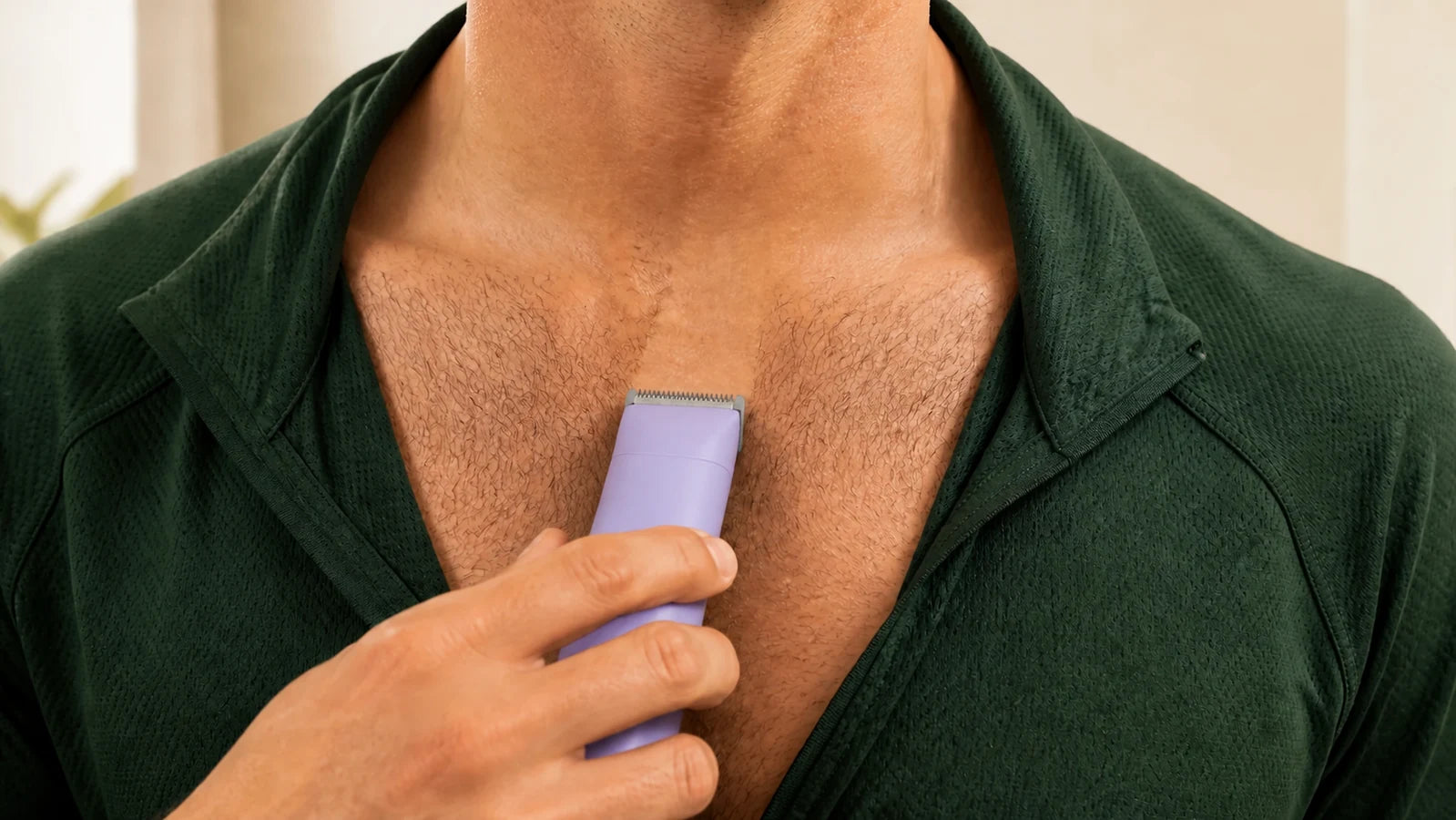
Attachment & starting length
Guard first · 6–9 mm
Confirm the area and attachment in your model manual. Shorten longer hair before going closer.
Direction & skin
With the grain on flat skin
Use light pressure and stretch loose skin with your free hand.
Avoid & aftercare
Work around nipples rather than directly over them. Rinse, pat dry, and moisturize if your skin feels dry.
Back & shoulders
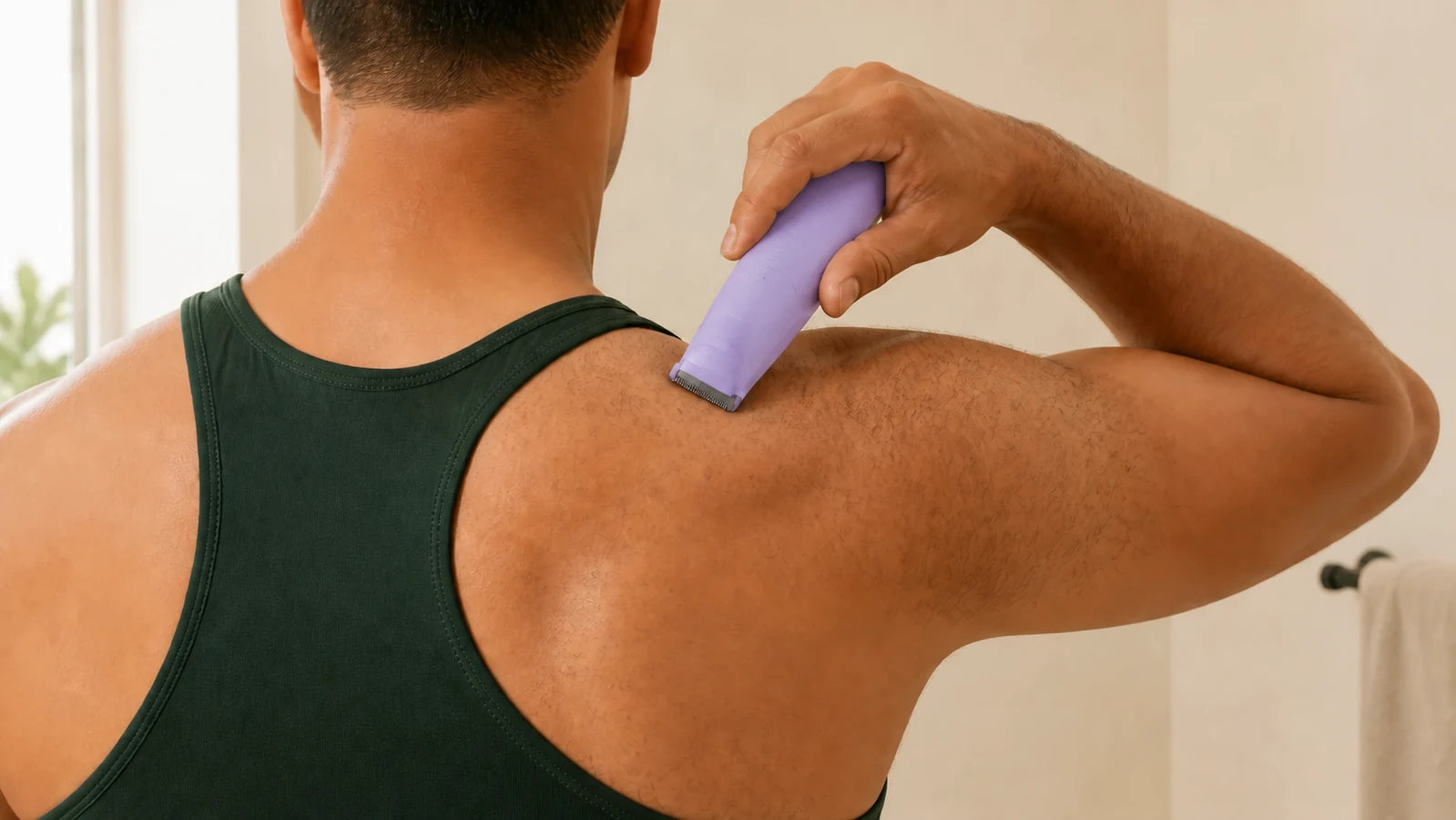
Attachment & starting length
Guard first · 6–9 mm
Use a handled attachment or ask for help where you cannot see or reach safely.
Direction & skin
Short overlapping passes
Keep the head flat and follow the direction the hair naturally lies.
Avoid & aftercare
Do not reach blindly with a bare blade. Brush away loose hair, then rinse and moisturize as needed.
Underarms
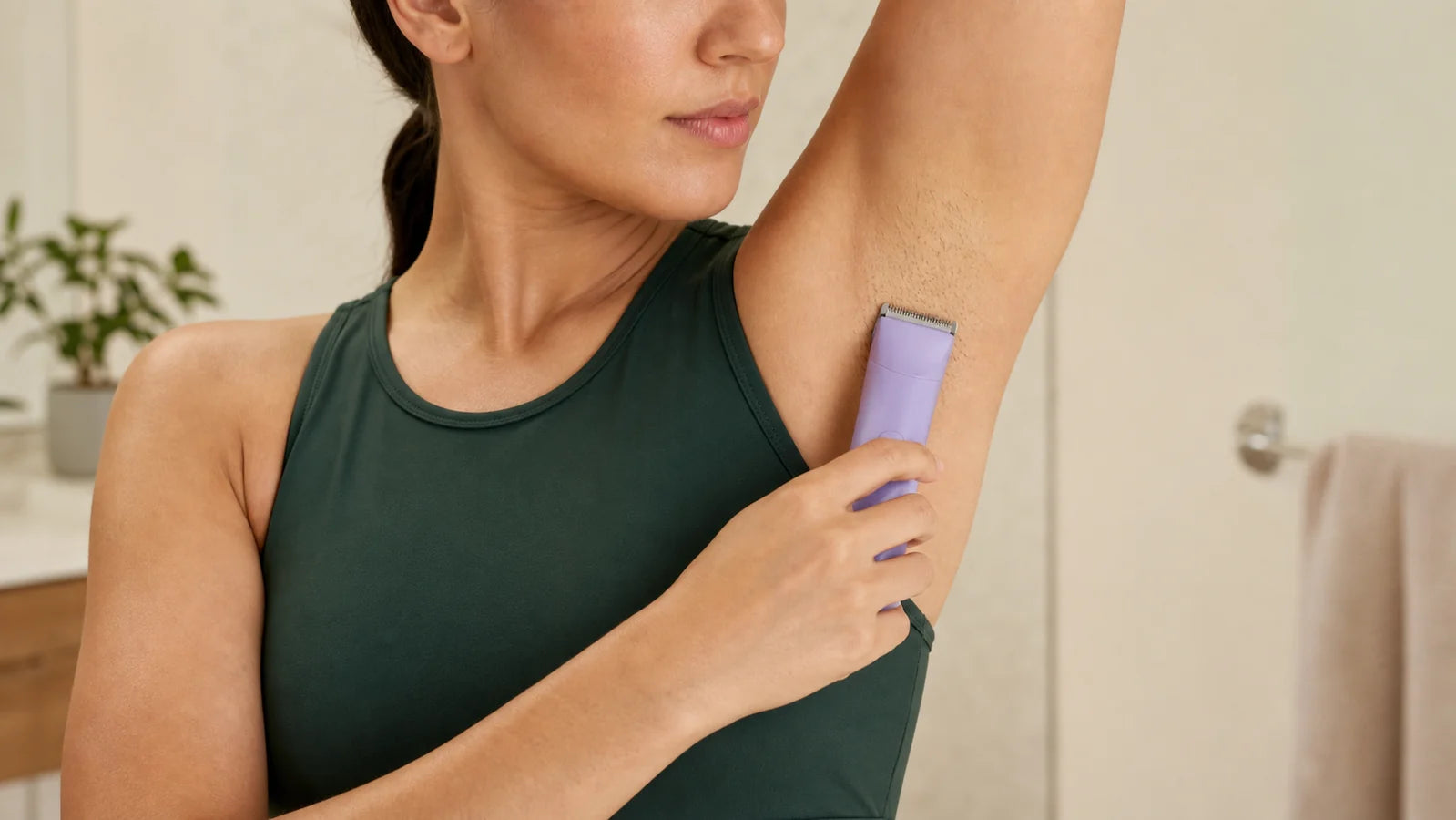
Attachment & starting length
Guard first · 3–6 mm
Check that your attachment is approved for underarms and begin longer if hair is dense.
Direction & skin
Raise your arm; move slowly
Flatten folds and use light passes in more than one direction only after checking your skin.
Avoid & aftercare
Pause on irritated skin. Rinse residue, pat dry, and wait before applying fragranced deodorant.
Arms & legs
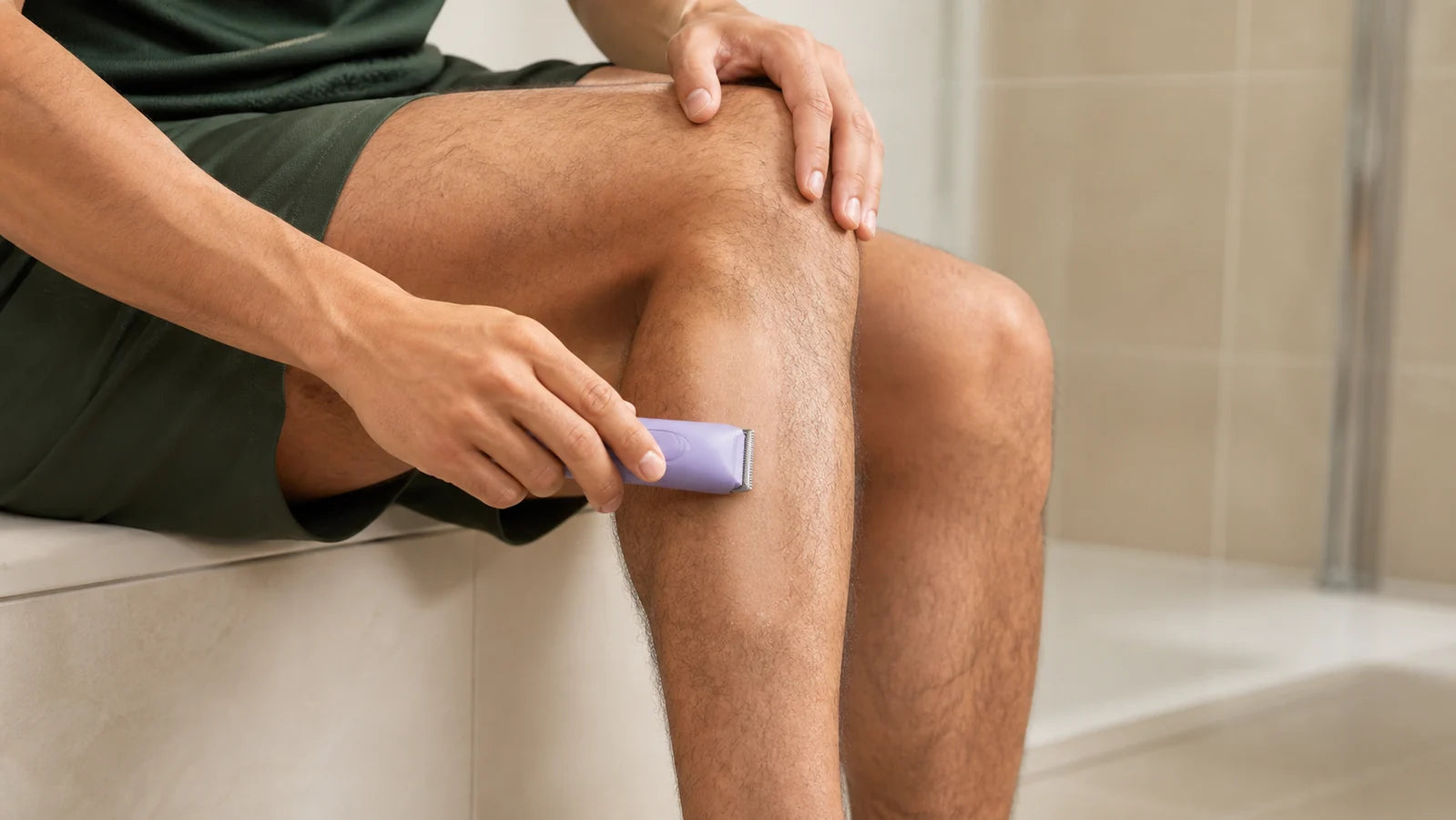
Attachment & starting length
Guard first · 6–9 mm
Start longer on dense hair and shorten in stages after checking the result.
Direction & skin
With the grain, then reassess
Straighten knees and elbows and use short strokes around ankles and other contours.
Avoid & aftercare
Do not press into kneecaps, ankles, or elbow creases. Rinse and moisturize dry areas afterward.
Pubic area & bikini line
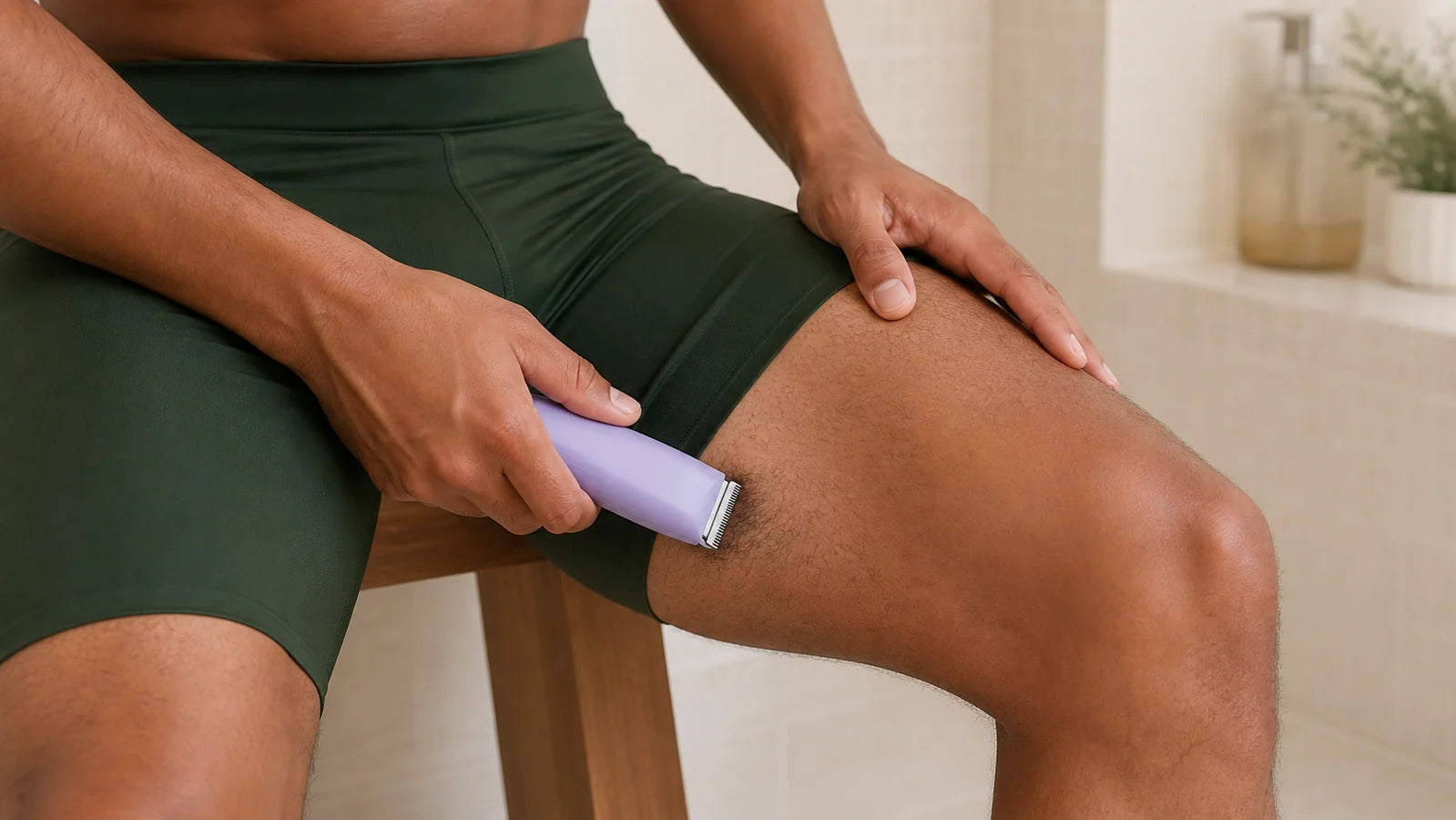
Attachment & starting length
Guard first · 6–9 mm
Use only attachments and external areas approved in your model manual.
Direction & skin
With the grain on taut skin
Use your free hand to flatten the pubic mound, bikini line, or groin crease before each short pass.
Avoid & aftercare
External skin only. Avoid genitals, mucosal tissue, broken skin, and blind passes. Rinse, pat dry, and wear loose clothing.
Hair and skin considerations

Fine or straight hair
Start with the grain and use the fewest passes needed.
Reason / Fix
Reason
Fine hair can be easy to overwork, especially with repeated passes over the same skin.
Fix
Use a guard for visible length. For a closer result, keep pressure light and stop when the result is even.

Thick or coarse hair
Shorten in stages before attempting a closer trim.
Reason / Fix
Reason
Long or dense hair can create resistance when you attempt a close result in one pass.
Fix
Begin with a longer guard, work in small sections, clear loose hair, and recharge if the trimmer begins to pull.

Curly or ingrown-prone hair
Leave a little length and trim with the grain first.
Reason / Fix
Reason
A very close result can make curved hairs more likely to grow back into skin.
Fix
Leave a little length, use light pressure, and limit repeat passes. Pause if bumps become painful or inflamed.

Sensitive or reactive skin
Patch-test a small area and wait before continuing.
Reason / Fix
Reason
Repeated passes and excess pressure can increase discomfort on reactive skin.
Fix
Patch-test first, start longer, move with the grain, and stop if irritation builds. Give skin time to recover.
Safety: when not to shave

Skin check
Continue when
Pause when
Skin is clean, intact, and comfortable
Skin is cut, inflamed, infected, or painful
A small test area stays calm
You feel burning, sharp pain, or worsening irritation
You can clearly see and flatten the area
A skin change is unfamiliar or hard to identify
Previous irritation has fully settled
Symptoms are severe, spreading, or persistent

Device check
Continue when
Pause when
The manual approves the attachment and body area
You cannot confirm the area or wet-use rating
The blade and guard are intact and aligned
The head is chipped, bent, loose, or damaged
The head is clean, dry, and securely attached
There is trapped debris, residue, or contamination
Power and cleaning follow the model instructions
Hands, cable, or charging setup create a wet-use risk
Troubleshooting common trimming problems

Hair Pulling
Start with a clean, sharp blade and a full charge. Shorten longer hair with a guard first, then work in small sections without forcing the trimmer.
Reason & Fix
Why it happens
Hair may be too long, the battery may be low, or the blade may be clogged.
How to fix
Charge the trimmer, brush away loose hair, and use a longer guard for the first pass.

Razor Burn
Use light pressure and limit repeat passes. If your manual allows wet use, add shaving gel and stop when heat or stinging begins.
Reason & Fix
Why it happens
Too much pressure, too many passes, or trimming too close can irritate skin.
How to fix
Use lighter pressure, trim with the grain first, and give your skin time to calm down.

Ingrown hairs
Trim with the grain and avoid a skin-close finish on ingrown-prone areas. Exfoliate gently only after the skin has calmed.
Reason & Fix
Why it happens
Hair can curl back into the skin after a very close trim.
How to fix
Avoid going too close on sensitive areas, exfoliate gently, and moisturize after trimming.

Redness
Rinse with cool water, pat dry, and apply a fragrance-free moisturizer. Wait until the skin feels calm before trimming again.
Reason & Fix
Why it happens
Friction, dry skin, or repeated passes can cause temporary redness.
How to fix
Rinse with cool water, pat dry, moisturize, and avoid tight clothing for a few hours.
Aftercare: What to do after trimming

Rinse skin
Use cool or lukewarm water to remove loose hair.


Pat dry
Avoid rubbing freshly trimmed skin.


Moisturize
Use a gentle, fragrance-free moisturizer if your skin feels dry.


Wear loose clothing
Give sensitive areas time to breathe after trimming.


Clean your trimmer
Brush away hair, rinse washable parts if allowed, and dry completely.

Keep your trimmer performing at its best
Clean, dry and recharge your trimmer after use to protect the blade and battery.
STEPS 1
Brush Away Hair

STEPS 2
Rinse the Blade

STEPS 3
Dry Completely

STEPS 4
Recharge for Next Use

Reviewed for Skin Safety
This guide was reviewed for clear safety steps and practical aftercare to support a comfortable, confident grooming routine.
-
 Reviewed for clarity
 -
Checked for practical safety
-
General grooming education


Jessica R. Burgy, MD
Board-Certified Dermatologist
 REVIEW SCOPE
Reviewed the guide's sensitive-area precautions, skin-comfort guidance, and practical aftercare recommendations.
 Alpha Omega Alpha
 MD, Marshall University
 Dermatology Residency, MCG

Dylan Greeney, MD, FAAD
Board-Certified Dermatologist
REVIEW SCOPE
Reviewed the guide's irritation-reduction techniques, ingrown-hair awareness, and guidance on when to pause shaving.
AOA, Top 10%
Indiana University Residency
 U.S. Army Veteran

Madison Lee
Registered Nurse
REVIEW SCOPE
Reviewed the guide for clarity, accuracy of safety steps, and practical aftercare information.
 BSN, RN
 Patient Advocate
 Wellness Enthusiast

Jonathan Pittard
Physician Assistant, PA-C
REVIEW SCOPE
Reviewed the guide for practicality, safety considerations, and general grooming education.
Idaho State University
PA-C
Clinician
Master's Degree
Frequently asked questions
-
Can you use a body trimmer on your face?
Only if the product manual says the trimmer and blade are suitable for facial hair. Use a clean head, choose a longer guard for the first pass, and avoid moving the same uncleaned blade between intimate areas and your face.
-
Is it better to trim body hair wet or dry?
Dry trimming gives better visibility and is usually easier for longer hair or a first pass. Wet trimming can reduce friction, but only use it when your product manual confirms that the trimmer is waterproof or approved for wet use.
-
Which direction should you shave or trim body hair?
Start with the grain, moving in the direction the hair naturally grows. If your skin remains comfortable and you want a closer result, try a second pass across the grain. Going against the grain is closest but is more likely to cause irritation or ingrown hairs.
-
What guard length should beginners use?
Start with the longest guard that suits the area, especially on longer hair or sensitive skin. Trim gradually and switch to a shorter guard only after checking the result and your skin comfort.
-
How can you prevent irritation and ingrown hairs?
Use a clean, sharp blade, trim longer hair first, apply light pressure, and avoid repeated passes over the same spot. Start with the grain, rinse the skin afterward, pat dry, and use a gentle fragrance-free moisturizer if needed.
-
How should you clean a body trimmer after use?
Turn the trimmer off, remove loose hair with the cleaning brush, and detach the head if the manual allows it. Rinse only parts identified as washable, then let every component dry completely before reassembly, charging, or storage.
Get in Touch
Whether you need support or want to share feedback, our team is ready to help.
Email Address
service@spotmatecare.com
SMS Number
SPOTMATE to (833) 524-0498
